


- September 25, 2025
- Posted by: Melanie Scott
- Category: Market News

The U.S. economy showed surprising resilience in Q2 2025, with strong consumer spending pushing final GDP growth up to 3.8%, far beating expectations of 3.3%. This follows a 0.6% contraction in Q1, the first retreat in three years, which was largely caused by a surge in imports in anticipation of tariffs. The stronger-than-expected growth in Q2 suggests underlying domestic demand remains solid, which provided support to the USD even after recent interest rate cuts by the Federal Reserve.
The U.S. labour market data also surprised to the upside. Unemployment claims for the week ending Sept. 20 came in at 218,000, well below the expected 233,000 and the previous week’s 232,000. This report arrives just a week after the Fed cut its benchmark rate by a quarter percentage point, partly due to concerns over a weakening job market. The lower-than-expected claims indicate that layoffs are limited and the labour market is holding up better than feared, which could ease worries about employment deterioration and support the USD, despite broader trends of slowing payroll growth and low job openings.
Core durable goods orders in August rose 0.4% month-over-month, outperforming expectations for a 0.1% contraction, indicating continued business investment strength. Meanwhile, the housing sector showed signs of softening, as existing-home sales ticked down 0.2% month-over-month and unsold inventory falling 1.3%. While the decline in sales suggests cooling housing activity, the drop in inventory may support prices.
In Canada, attention is turning to the upcoming fall budget on Nov. 4, which is expected to reveal a sharp increase in the federal deficit. The Parliamentary Budget Officer projects an annual deficit of $68.5 billion, up from $51.7 billion last year. The increase reflects a combination of higher government spending and a tax-revenue shortfall caused by weaker-than-expected economic growth. Additional defense expenditures to meet NATO’s updated 5% of GDP target by 2035 was not included in the projection. A larger-than-expected deficit weighed on the CAD, as markets factor in longer-term fiscal risks.
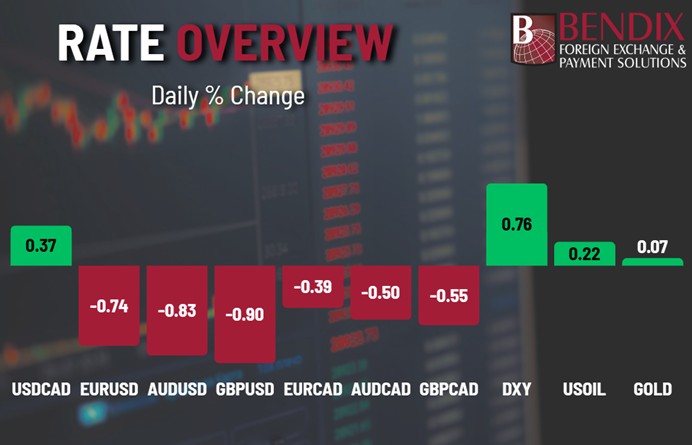
The combination of solid U.S. economic data and Canada’s widening fiscal deficit pushed the USD/CAD pair up to a four-month high on Thursday.
Curious about how FX risk management can benefit your business? Reach out to Bendix today, and we’ll guide you through it.