


- October 30, 2025
- Posted by: Melanie Scott
- Category: Market News

Tariff De-escalation and Rate Cuts Reshape the Trade Landscape
Trade winds are shifting as U.S. President Trump and Chinese President Xi Jinping reached a landmark agreement in Busan today, with meaningful implications for currency markets and cross-border commerce. Following a 90-minute meeting Trump described as a “12 out of 10,” the two nations have agreed to pause escalating tariff tensions. This is a significant development for companies carrying substantial FX exposure.
What Moved the Markets
The headline agreement reduces U.S. tariffs on Chinese imports from 57% down to 47%, with the fentanyl-related tariff cut in half from 20% to 10%. China has suspended new rare earth export restrictions and committed to resuming substantial purchases of U.S. agricultural products, particularly soybeans. Both nations also agreed to a one-year pause on additional port fees, providing some relief for trade relationships that have faced historic volatility.
Global Central Bank Divergence
On the monetary policy front, we’re seeing a divergence across major central banks. The Bank of Canada lowered its overnight rate by 25 basis points to 2.25%, signaling a likely pause in the easing cycle. The Fed reduced rates to 3.75-4% and announced it would halt quantitative tightening as of December 1st. Meanwhile, the European Central Bank held rates steady at 3.25%, maintaining a cautious stance on inflation concerns. The Bank of Japan kept its policy rate unchanged at 0.25%, continuing its gradual normalization approach. These dual North American rate cuts have created a more supportive environment for emerging market currencies, though persistent uncertainty around U.S. trade policy continues to weigh on Canadian economic outlooks.
Currency and Commodity Movement
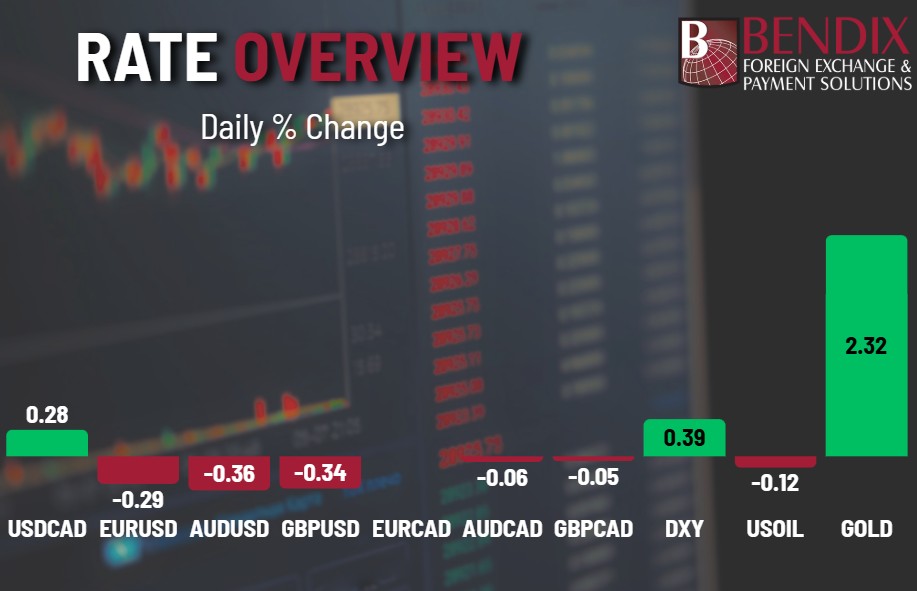
USD/CAD is trading near 1.39, reflecting narrowing rate differentials and a softer U.S. dollar. The Canadian dollar has drawn support from easing trade tensions, though longer-term headwinds like Canada’s structural economic challenges keep the pair range-bound. Crude oil sits around $60 USD per barrel, as global supply surges from non-OPEC+ producers while demand expectations remain soft.
Why This Matters for Your Business
For companies with cross-border operations and natural FX hedging needs, this period presents both opportunity and complexity. The tariff de-escalation offers temporary reprieve from supply chain disruption, while the global central bank divergence is recalibrating rate expectations across North America and abroad. Import-dependent businesses should stay focused on trade policy clarity, particularly ahead of 2026 CUSMA negotiations.
The balance of risks leans toward volatility, but today’s headlines suggest that pragmatism may be returning to trade relations for at least the next 12 months.
At BendixFX, we’re tracking these developments closely to help your business navigate what comes next.