


- August 22, 2025
- Posted by: Melanie Scott
- Category: Market News

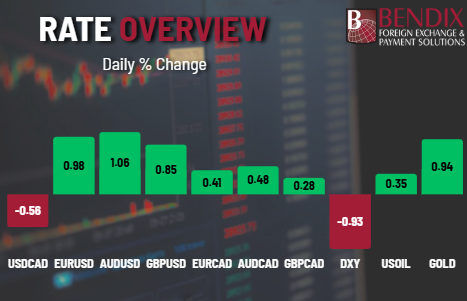
At the Fed’s annual Jackson Hole Symposium, Chair Jerome Powell indicated that current economic conditions “may warrant” an interest rate cut at the upcoming September 16–17 meeting. However, he stressed that the Fed will proceed cautiously, carefully assessing the impact of tariffs and other policies on the broader economy. The labor market remains in a fragile equilibrium, with both supply and demand slowing notably and creating heightened downside risks that Powell warned could materialize quickly. While tariffs are still exerting upward pressure on prices, Powell said their inflationary impact is expected to be temporary. Following his remarks, the U.S. dollar weakened against most major counterparts, and markets are now pricing in nearly a 90% probability of a 25-basis-point cut in September.
Canada has plans to lift many retaliatory tariffs on U.S. goods that comply with the US-Mexico-Canada Agreement (USMCA), effective September 1, resulting in a strengthening Canadian dollar. The move, framed as a goodwill gesture to revive stalled trade talks, marks a significant easing of tensions with Washington. Notably, tariffs on U.S. steel, aluminum, and automobiles will remain in place.
Canadian retail sales rose 1.5% in June to $70.2 billion, with gains across all nine subsectors, led by food and beverage retailers. Core retail sales outperformed expectations, climbing 1.9% compared with forecasts for 1.3% and rebounding strongly from the prior month’s 1.2% contraction.
Oil prices initially climbed as much as 1.5% alongside other risk assets after Powell’s remarks came across as more dovish than some investors anticipated, but later gave back gains. Markets remain focused on India’s continued imports of discounted Russian oil, drawing sharp criticism from U.S. trade adviser Peter Navarro, who reiterated that U.S. import levies on Indian goods will double on August 27 as planned. Oil’s upside remains capped by expectations of a post-summer supply glut and concerns that U.S. trade policies could dampen global demand.
Current Market Conditions:
Don’t let FX volatility affect your bottom line—connect with Bendix to learn how we can help mitigate risks and maximize opportunities.