

- December 10, 2025
- Posted by: Robert Marshall
- Category: Market News

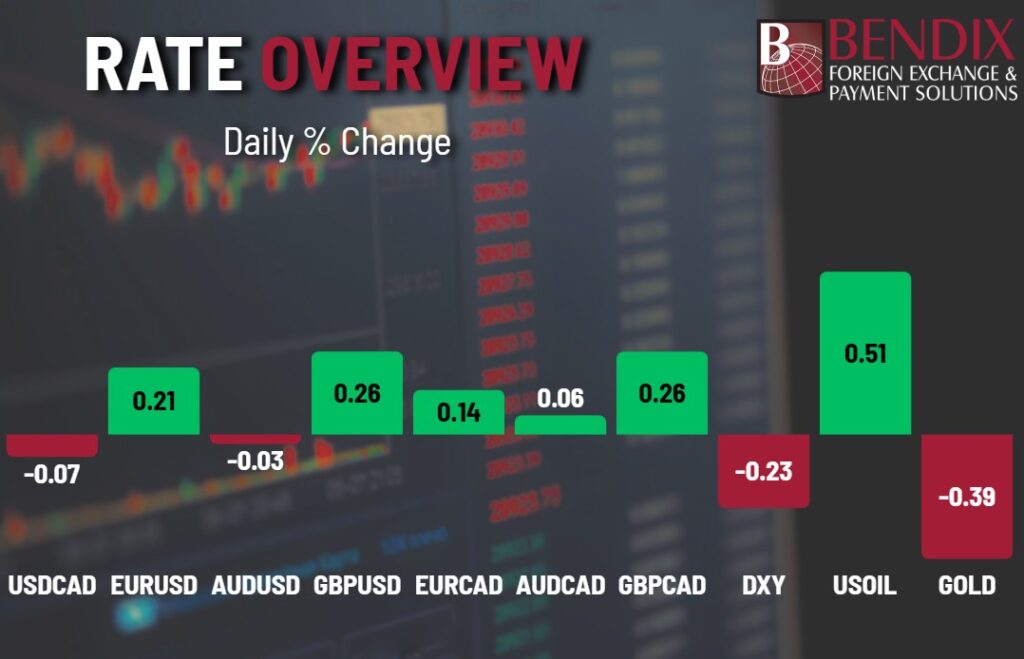
The US Dollar Index is trading flat to slightly softer after the Federal Reserve delivered a “hawkish cut,” reducing monetary policy accommodation by 0.25% but signaling only one additional move down for all of 2026. This has effectively put a floor under the greenback, preventing deeper declines while keeping front-end yields elevated. The easy part of the dollar sell-off is over; now, the market must digest a slower path toward equilibrium.
USD/CAD is range-bound following the Bank of Canada’s decision to hold policy steady at 2.25%. By confirming that its easing cycle is effectively complete, the central bank has removed the immediate downside risk from policy divergence. The loonie is no longer fighting a dovish central bank, but it remains capped by the broader strength of the US dollar and ongoing tariff risks.
EUR/USD broke through intermediate resistance as softer expectations for additional Federal Reserve easing cleared the path for the euro to reclaim momentum. The pair is now testing levels not seen since early November, with options activity pointing to renewed conviction among buyers. Positioning has stretched, but technical support remains intact.
GBP/USD reclaimed ground and maintained above key retracement levels, though sterling’s advance has become choppy as it trades between two pivotal zones. The pound benefited from a softer dollar backdrop but positioning remains cautious as traders weigh upcoming central bank decisions and economic surprises heading into year-end.
AUD/USD outperformed the broader FX complex, trading near monthly highs as markets priced in a sharply different path for the Reserve Bank of Australia versus its peers. Commodity currencies are reflecting a rotation toward growth-driven positioning.
Why this matters: The narrative has shifted from “divergence” to “calibration.” With both the Fed and the Bank of Canada signalling extended pauses or very gradual moves, the intense volatility of recent months is likely to be replaced by range-trading. This changes the playbook for corporate treasurers from fighting trends to managing within established bands.
What we’re watching: Whether USD/CAD holds its downside floor into Friday, the implications of higher volatility expectations from markets assigning tail-risk probability to a Bank of Japan surprise, and whether liquidity dries up in the final trading days before year-end.
Don’t let a shift to range-trading catch your bottom line off guard.
Contact us today to discuss how these central bank shifts impact your 2026 budget.