


- July 10, 2025
- Posted by: Melanie Scott
- Category: Market News

U.S. President Donald Trump threatened to slap a 50% tariff on Brazilian imports, marking his most extreme use of trade policy yet to pressure a foreign government over unrelated domestic affairs. In a letter to Brazil yesterday, Trump condemned the prosecution of former President Jair Bolsonaro, a right-wing populist accused of plotting a coup. Brazil’s President Luiz Inácio Lula da Silva swiftly responded on social media, declaring that Brazil will not be “tutored” by anyone and this morning called for an urgent cabinet meeting to work to de-escalate the crisis.
The Japanese yen weakened this week after President Trump reiterated plans to impose 25% tariffs on goods from Japan and South Korea, adding a fresh twist to his unpredictable trade war. So far since Monday, Trump has notified 21 countries, including major Asian trade partners, that sharply higher U.S. tariffs, ranging from 25% to 40%, would take effect on August 1. Despite the tough rhetoric, immediate market reaction to the letters was fairly muted. Copper continues to surge, up 12% since Tuesday’s announcement that Trump would impose a 50% tariff on copper imports. The move would likely trigger front-running activity throughout the industrial sector. This new copper tariff is in addition to existing 50% tariffs on steel and aluminum, 25% on autos, and separate duties on Canada, Mexico, and China.
Yesterday, the FOMC minutes from June’s meeting were released and showed a clear divide among Fed officials. Some expect no rate cuts or just one this year, while others see room for two. The outlook remains highly dependent on tariff-driven inflation and incoming data through the summer. The Fed voted unanimously to hold rates steady at 4.50%, citing solid growth, a strong labor market, and inflation still above target. Officials signaled no urgency to cut rates, expecting inflation to ease gradually over the next two years.
The Australian dollar extended gains after the Reserve Bank of Australia surprised markets by holding its cash rate steady at 3.85% on Monday, defying expectations for a cut.
Amid growing U.S. trade-barriers, Canada is accelerating efforts to finalize a free trade agreement with the 10-member Association of Southeast Asian Nations (ASEAN) as part of a broader strategy to expand into new markets. Foreign Minister Anita Anand believes that the Indo-Pacific region will drive global economic growth in the coming years.
Oil prices fell over 2% today as mounting trade tensions and speculation that OPEC+ may halt planned output hikes raised concerns about a potential hit to global energy demand.
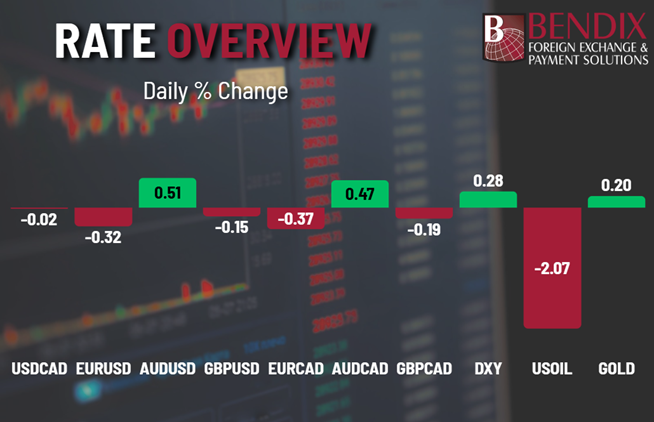
Current market conditions:
Gain the competitive edge in FX—connect with Bendix to discuss solutions that help you thrive in fluctuating markets.